
 SKBI Newsletter | March 2026 Green Spark in Private Equity: The Role of Investors | |||
Research Perspective | Industry Insights | ||
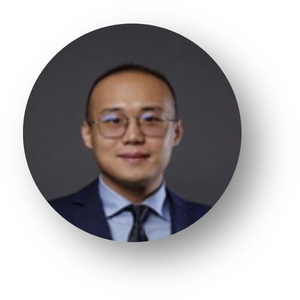 | Tianhao Yao, |  | Elena Okorochenko, |
Media coverage and policy makers in recent times have raised concerns that private equity ownership may generate negative impacts on workers, communities, and the environment. An SMU study examines whether ESG investors of the private equity industry (i.e., Limited Partners, or LPs) can help curb these negative externalities.
Overall, the analysis shows that ESG-concerned LPs can mitigate PE negative externalities through capital allocation. PE firms internalize these ESG concerns when choosing portfolio companies and engage with portfolio companies to mitigate ESG-related risks.  Duevski, T., Rastogi, C., & Yao, T. (2025). Can limited partners mitigate negative externalities in private equity? Working paper. | Commenting on ESG trends over the decades, SKBI Advisory Board member Elena Okorochenko noted that ESG appears to be facing a pullback in the current decade compared to the last. Some have termed this shift “greenhushing”, where firms intentionally under-communicate ESG goals or progress to avoid scrutiny, accusations of greenwashing, or litigation.
Overall, Elena highlighted the relevance and timeliness of Prof Yao’s research in the current landscape as “it shows clear evidence and implications of poor ESG reputation on the LPs ability to raise funds.”. | ||
Meet the Author: Assistant Professor Tianhao Yao joined SMU in 2023 after completing a PhD in Finance at HEC Paris. His research interests include corporate finance, environmental, social, and governance issues, sustainable finance, and asset management. | Meet the Expert: Elena Okorochenko was the Former Managing Director and Head of Asia-Pacific at S&P Global Ratings. Her expertise spans capital markets, M&A (both greenfield and cross-border), emerging markets, and APAC economies. She holds a master’s degree in economics from the Higher School of Economics in Moscow and has been on the SKBI Advisory Board since 2021. | ||
About SKBI: The Sim Kee Boon Institute generates financial economic research through multidisciplinary collaborations involving not only the SMU community, but also research talent from around the world as well as industry and public-sector partners. The Institute will focus its efforts on the areas of (1) Market Innovations and FinTech, (2) Sustainability and Green Finance, and (3) Household Finance and Behaviour. To maintain relevance to finance practitioners and policy-makers, SKBI also adopts a view on Asian and global economic trends. View research. About the SKBI Newsletter: This monthly newsletter provides a unique platform to connect academic researchers and industry experts. It aims to enhance the outreach of academic studies, while fostering dialogue on key insights and challenges and stimulating new ideas and collaborations. © Copyright 2026 by Singapore Management University. All Rights Reserved. | |||
SUBSCRIBE TO THE SKBI MAILING LIST*
Get updates on SKBI news and forthcoming events.
*Please note that upon providing your consent to receive marketing communications from SMU SKBI, you may withdraw your consent, at any point in time, by sending your request to skbi_enquiries [at] smu.edu.sg (subject: Withdrawal%20consent%20to%20receive%20marketing%20communications%20from%20SMU) (skbi_enquiries[at]smu[dot]edu[dot]sg). Upon receipt of your withdrawal request, you will cease receiving any marketing communications from SMU SKBI, within 30 (thirty) days of such a request.