

SKBI Newsletter | November 2026 (Why) Are We Underinsured? | |||
Singapore has a highly developed insurance market and strong insurance sales, yet substantial protection gaps remain—many households have insurance, but not enough coverage to meet their financial protection needs. Why do households remain underinsured even when insurance products are widely available? In a recent discussion at SKBI, Akhil Doegar, Group Head of Distribution at Singlife, and the SKBI Research Team explored this important question from both the industry and academic perspectives. | |||
Industry Perspective | Academic–Practitioner Dialogue | ||
 |
Akhil Doegar, | 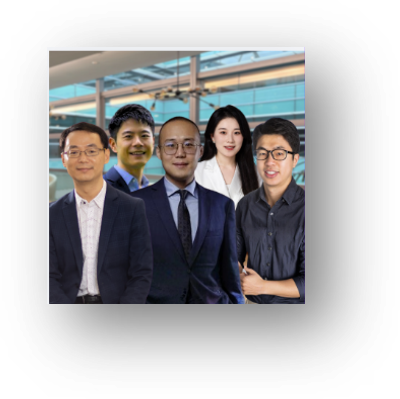 |
SKBI Research Team: |
The protection gap may not simply reflect insufficient consumer demand or financial literacy. Insurance profitability depends on five key drivers—mortality, morbidity, persistency, investment returns and expenses. Looking across the functioning of these drivers, Akhil proposes a supply-side framework that asks how capital is allocated, how protection is sold and who ultimately bears the risk.
Overall, Akhil proposes a supply-side framework for examining the protection gap: how capital is allocated, how distribution economics work, and how risks are transferred may all shape the protection ultimately available to hoAuseholds. | The protection gap echoes long-standing puzzles in academic research, including the “annuity puzzle”—why households annuitize much less of their wealth than standard economic models predict. While academic research has offered various explanations, Akhil’s framework highlights several important questions that remain insufficiently understood.
Akhil’s framework both echoes existing academic evidence and points to important unanswered questions. In particular, more research, including research using adviser-level data, is needed to understand the social value of insurance companies and how interactions among their investment, insurance, distribution and reinsurance activities shape outcomes for policyholders and society.
References: Koijen, R. S. J., and M. Yogo, 2016. “Shadow Insurance.” Econometrica 84, 1265–1287. Kirti, D., and N. Sarin, 2024. “What Private Equity Does Differently: Evidence from Life Insurance.” Review of Financial Studies 37, 201–230. | ||
Meet the Expert: Akhil Doegar is Group Head of Distribution at Singlife and Chairman of GROW with Singlife. He also serves on the board of Singlife Philippines. He previously held senior positions at DBS Bank, including Managing Director and Head of Digital Payments, and served on the board of AXS Pte Ltd. | Meet the SKBI Research Team: Hong Zhang (Professor of Finance), Tianhao Yao (Assistant Professor of Finance), Pengfei Ma (Assistant Professor of Finance), Shihao Yu (Assistant Professor of Finance), and Mengyu Wang (Senior Research Fellow). View the full list of Research Fellows & Affiliated Faculty. | ||
About SKBI: The Sim Kee Boon Institute generates financial economic research through multidisciplinary collaborations involving not only the SMU community, but also research talent from around the world as well as industry and public-sector partners. The Institute will focus its efforts on the areas of (1) Market Innovations and FinTech, (2) Sustainability and Green Finance, and (3) Household Finance and Behaviour. To maintain relevance to finance practitioners and policy-makers, SKBI also adopts a view on Asian and global economic trends. View research. About the SKBI Newsletter: This monthly newsletter provides a unique platform to connect academic researchers and industry experts. It aims to enhance the outreach of academic studies, while fostering dialogue on key insights and challenges and stimulating new ideas and collaborations. © Copyright 2026 by Singapore Management University. All Rights Reserved. | |||

SUBSCRIBE TO THE SKBI MAILING LIST*
Get updates on SKBI news and forthcoming events.
*Please note that upon providing your consent to receive marketing communications from SMU SKBI, you may withdraw your consent, at any point in time, by sending your request to skbi_enquiries [at] smu.edu.sg (subject: Withdrawal%20consent%20to%20receive%20marketing%20communications%20from%20SMU) (skbi_enquiries[at]smu[dot]edu[dot]sg). Upon receipt of your withdrawal request, you will cease receiving any marketing communications from SMU SKBI, within 30 (thirty) days of such a request.